Your Will: The Foundation for Your Family’s Future
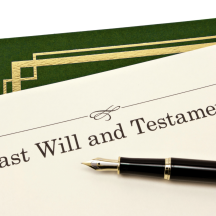
 Your will is the foundation of your estate plan. It tells the court who should inherit your property, who should care for your minor children, and who should handle your affairs after death.
What Makes a Will Valid?
Every state has its own rules, but the core requirements are fairly consistent. In Alabama, for example, a valid will must:
- Be in writing
- Be signed by the testator (the person making the will)
- Be witnessed by two people who saw the testator sign and saw each other sign
- Be made by someone at least 18 years old and of sound mind
These rules are designed to protect your intentions and prevent disputes later on. If any of these steps are skipped, the court may not honor the will—no matter how clear your wishes were.
Updating and Revoking Your Will
You can change or revoke your will at any time—as long as you have the mental capacity to do so. Major life events like marriage, divorce, or the birth of a child are especially important moments to revisit your will and make sure it still reflects your wishes.
Real World Scenario: When a Will Misses the Mark
Lena decided to write her own will using information she found online. She asked a neighbor to sign it, then brought it to work and had a co-worker witness her signature after the fact.
Unfortunately, because the signing process didn’t follow the required legal steps, Lena’s will isn’t valid. Even though her intentions were clear, the court can’t honor a will that doesn’t meet formal execution standards.
Don’t make a mistake when it comes to a legal will.
Contact Heircraft Planning for an appointment.
(251) 398-0081
We offer:
- Simple, Flat Rate Pricing
- An Easy, Streamlined Process
- 24/7 Online Access to Your Estate Planning Documents
Serving:
- Southern Alabama
- Mobile & Baldwin County Alabama
- Florida Panhandle
Will and Trust Packages
Simple, Flat Rate Pricing
At Heircraft Planning, we believe estate planning should bring peace of mind—not surprise costs. That’s why we offer predictable, all-inclusive pricing based on the type of plan that fits your needs. Most families choose either a Will-Based Plan or a Trust-Based Plan, and we’ll walk you through both options during your first meeting. Your plan is personal, and so is our process. We’ll guide you with care, answer every question, and adjust along the way—because when life changes, your estate plan should too.
Will Package
- Last Will and Testament
- Financial Power of Attorney
- Healthcare Power of Attorney
- Living Will
- Digital Assets Authorization
- Personal Property Memorandum
- HIPAA Authorization
- Remembrance & Services Memorandum
Trust Package
- Revocable Living Trust
- Pour-Over Will
- Financial Power of Attorney
- Healthcare Power of Attorney
- Living Will
- Digital Assets Authorization
- Personal Property Memorandum
- HIPAA Authorization
- Remembrance & Services Memorandum
- Certificate of Trust
- Funding Instructions
Frequently Asked Questions About Wills
How often should I review my will in Alabama?
Most estate planning attorneys recommend reviewing your will every three to five years, but the more reliable trigger is a change in your life, not the calendar.
Certain events should prompt a review relatively soon after they occur. Marriage, divorce, the birth or adoption of a child, the death of a named executor or beneficiary, a significant change in your assets, or a move between states are all situations where your existing will may no longer reflect your intentions or work the way you expect under Alabama law.
The people you named in your will matter just as much as the language in it. The executor you designated years ago may no longer be the right person for that role. A beneficiary may have passed away. A guardian you named for minor children may have moved or had a significant change in their own circumstances. These are the kinds of updates that are easy to overlook but important to address.
A will can only carry out the decisions you made when you signed it. It has no way to account for changes that happened after the fact. Reviewing it regularly ensures that the document still reflects what you actually want and that the right people still have the right authority when it matters most.
Establishing a regular review habit is one of the simplest ways to keep your will working as intended.
What happens to my cryptocurrency, bank accounts, and social media when I die in Alabama?
Digital assets are one of the most commonly overlooked areas of estate planning, and they present a unique set of challenges that traditional wills and trusts were not originally designed to address. In Alabama, what happens to your digital assets after death depends on what type of asset is involved, how it is held, and whether your estate plan accounts for it.
Cryptocurrency
Cryptocurrency presents one of the most significant access challenges in estate planning. Unlike a bank account, there is no institution to contact and no customer service line to call. If your executor or family members do not have access to your private keys, wallet credentials, or recovery phrases, the assets may be permanently inaccessible regardless of what your will says.
Ownership of cryptocurrency is controlled by access, not by a document. That means planning for cryptocurrency is less about drafting language and more about making sure the right person has the information they need to locate and access what you own.
Online Bank and Financial Accounts
Online financial accounts are generally considered probate assets if they are titled in your name alone and do not have a payable-on-death designation. In Alabama, those accounts would pass through your estate according to your will or intestacy laws if no will exists. Adding a payable-on-death beneficiary to a bank account is one of the simplest ways to allow those funds to transfer outside of probate directly to the person you choose.
Social Media Accounts
Each platform has its own policy for what happens to an account after the owner dies. Some allow for memorialization, others allow for account deletion upon request from a family member, and a few have legacy contact features that allow a designated person to manage the account in a limited capacity. These platform policies are not governed by your will, and Alabama law has limited reach over how a private company handles its own accounts.
That said, your estate plan can include a digital asset directive that documents your wishes for each platform and provides the information your executor needs to carry them out.
Why This Matters for Your Estate Plan
Alabama has adopted a version of the Revised Uniform Fiduciary Access to Digital Assets Act, which gives executors and trustees legal authority to access certain digital assets when properly authorized. However, that legal authority is only part of the solution. Practical access still depends on whether your fiduciary has the information needed to locate and manage what you own.
A complete estate plan accounts for digital assets alongside traditional ones. That means documenting what you own, where it is held, and how it can be accessed, and making sure the right person has both the legal authority and the practical information to act.
Digital assets are no longer a niche planning concern. They are part of everyday financial life, and they deserve the same attention as any other part of your estate.
Does a will avoid probate in Alabama?
This is one of the most common misconceptions in estate planning, and it is worth addressing directly. A will does not avoid probate in Alabama. In fact, a will is a probate document. It is the instruction set that guides the probate process, not a tool for bypassing it.
When you die with a will in Alabama, that document must be submitted to the probate court. The court validates it, appoints the executor named in the will, and oversees the administration of the estate. That process takes time, involves court filings, and is a matter of public record.
What a Will Does and Does Not Do
A will determines how your probate assets are distributed, who is responsible for managing your estate, and in the case of minor children, who you are nominating as guardian. It is an essential document, but its authority is limited to assets that are subject to probate.
Assets that pass outside of probate, such as accounts with beneficiary designations, jointly owned property with rights of survivorship, or assets held in a trust, are not controlled by your will. Those assets transfer according to their own legal mechanisms regardless of what your will says.
How Probate Can Be Avoided or Reduced
For families in Alabama who want to minimize or avoid probate, planning tools such as revocable living trusts, payable-on-death designations, and joint ownership arrangements can be used to move assets outside of the probate process. A trust, when properly funded, allows assets to pass directly to beneficiaries without court involvement.
The right approach depends on the size and nature of your estate, your family situation, and your goals. For some families a will is sufficient. For others a more comprehensive plan that reduces probate exposure makes sense.
Understanding the difference between having a will and having a plan that avoids probate is one of the most important distinctions in estate planning. A will is a necessary foundation, but it is not the same as a probate avoidance strategy.
Knowing what your documents actually do is the first step toward making informed planning decisions.
What makes a will legally valid in Alabama?
For a will to be legally valid in Alabama, it must meet a specific set of requirements under state law. A document that does not satisfy these requirements may be challenged or rejected by the probate court, which can leave your estate to be distributed under Alabama intestacy laws as if no will existed at all.
Age and Capacity
In Alabama, the person making the will, referred to as the testator, must be at least 18 years old and of sound mind at the time of signing. Sound mind generally means the person understands the nature of making a will, knows what property they own, recognizes who their natural heirs are, and understands how the document distributes their estate. A will signed during a period of incapacity or under circumstances suggesting undue influence can be challenged in probate court.
Written Document
Alabama requires that a will be in writing. Oral wills are not recognized under Alabama law in most circumstances, and a will that exists only as a verbal statement or an unsigned draft has no legal effect.
Signature
The testator must sign the will, or direct another person to sign it on their behalf in their presence if they are physically unable to do so themselves. The signature must be made with the intent of executing the document as a final will.
Witnesses
Alabama law requires that a will be signed in the presence of at least two witnesses who are present at the same time. Those witnesses must also sign the will in the presence of the testator. A witness who is also a beneficiary under the will may create complications, and it is generally advisable to use witnesses who have no interest in the estate.
Holographic Wills
Alabama does recognize holographic wills, which are wills that are entirely handwritten and signed by the testator without witnesses. While technically valid under Alabama law, holographic wills carry a higher risk of being challenged and may create complications during probate if their authenticity or the testator's intent is unclear.
Why Proper Execution Matters
A will that does not meet Alabama's execution requirements may be declared invalid regardless of how clearly it expresses the testator's wishes. The legal formalities exist to protect against fraud, coercion, and uncertainty, and courts take them seriously.
Working with an experienced estate planning attorney to draft and execute a will properly is the most reliable way to ensure the document holds up when it matters most. For more on notarization and how it affects the probate process, see the question below.
Does a will need to be notarized in Alabama?
Notarization is not required for a will to be valid in Alabama. A will that meets the state's basic execution requirements, meaning it is in writing, signed by the testator, and witnessed by two people present at the same time, is legally valid without a notary's involvement.
That said, notarization plays an important and practical role in the process through what is known as a self-proving affidavit.
What Is a Self-Proving Will?
A self-proving will includes a notarized affidavit signed by the testator and both witnesses at the time the will is executed. This affidavit serves as sworn testimony that the will was signed properly and voluntarily. When a will is self-proved, the Alabama probate court can accept it without having to locate and question the witnesses after the testator's death.
Without a self-proving affidavit, the court may need to track down the original witnesses to verify the will's validity. That process can create delays and complications during an already difficult time for the family.
The Practical Recommendation
While notarization is not legally required, making a will self-proving is a straightforward step that can simplify probate significantly. It costs little additional effort at the time of signing and can save considerable time and uncertainty later.
At Heircraft Planning, our staff includes notaries who can handle this step as part of the signing process.
Understanding the difference between what is legally required and what is practically advisable is part of making informed planning decisions.
Can someone who lives in another state be the executor of my will in Alabama?
Yes, in many cases someone who lives outside of Alabama can serve as the executor of your will. Alabama law does not impose a strict residency requirement that automatically disqualifies an out-of-state executor, which means you are generally free to name a trusted family member or friend regardless of where they live.
That said, there are practical and legal considerations worth understanding before making that decision.
Bond Requirements
In some situations, an out-of-state executor may be required to post a bond before being appointed by the Alabama probate court. A bond is essentially a financial guarantee that the executor will carry out their duties properly. Whether a bond is required depends on the circumstances and whether the will waives the bond requirement. Including a bond waiver in your will is a common and straightforward step that can simplify the appointment process for an out-of-state executor.
Practical Challenges
Even when an out-of-state executor is legally permitted, the practical demands of the role are worth considering. Probate administration in Alabama involves court filings, asset management, creditor notices, and coordination with beneficiaries. An executor who lives far away may face logistical challenges managing those responsibilities, particularly if the estate includes real property or other assets that require local attention.
Choosing the Right Person
The most important factor in choosing an executor is not geography. It is trust, organization, and the willingness to carry out the role responsibly. An out-of-state executor who is capable and committed can often manage the process effectively, particularly with professional guidance.
The executor you name is one of the most consequential decisions in your estate plan. That person will have legal authority over your estate and responsibility for carrying out your wishes. Choosing carefully, and making sure the person you name is willing and prepared to serve, matters as much as any other part of the plan.
How do I choose the right executor for my will in Alabama?
Choosing an executor is one of the most important decisions you will make in your estate plan, and it is one that deserves careful thought. The executor, known in Alabama as the personal representative, is the person legally responsible for carrying out your wishes after you die. That includes managing your assets, handling court filings, notifying creditors and beneficiaries, and ultimately distributing your estate according to your will.
The right person for that role is not always the most obvious choice.
Trustworthiness and Integrity
The most fundamental quality in an executor is trustworthiness. This person will have legal authority over your estate and access to your financial accounts and personal records. They will be making decisions that affect your beneficiaries, sometimes under pressure and in emotionally charged circumstances. You need someone whose judgment and integrity you trust without reservation.
Organization and Follow-Through
Probate administration in Alabama involves deadlines, paperwork, court filings, and detailed recordkeeping. An executor who is well-organized and capable of managing administrative responsibilities is better positioned to handle those demands without unnecessary delays or errors. Good intentions are not enough if the person struggles with follow-through on complex tasks.
Availability and Willingness
An executor needs to be available to dedicate real time and attention to the role, sometimes over a period of months. Before naming someone, it is worth having a direct conversation with them about what the role involves and confirming they are willing to serve. An executor who is unprepared for the responsibility can create significant complications for your estate and your beneficiaries.
Family Dynamics
In families with complex relationships or potential for disagreement, the choice of executor can affect how smoothly the process goes. Naming someone who is respected by all of the beneficiaries and capable of remaining neutral under pressure can reduce the likelihood of conflict during administration.
Professional Executors
In some situations, naming an individual family member or friend may not be the right fit. A professional fiduciary or corporate trustee can serve as executor when the estate is complex, when family dynamics make an individual appointment difficult, or when no suitable person is available. This is a less common choice but a legitimate one worth understanding.
Naming a Backup
It is advisable to name an alternate executor in your will in case your first choice is unable or unwilling to serve when the time comes. Circumstances change, and having a backup designated in the document avoids the court having to appoint someone you did not choose.
The executor you name will be the person responsible for carrying your plan across the finish line. Choosing someone who is capable, willing, and trustworthy is as important as any other decision in your estate plan.
What should I bring to my first meeting with a will attorney?
Your first meeting with a will attorney does not require you to have everything figured out. The purpose of that conversation is to help you understand your options and start building a plan that fits your situation. Coming prepared with some basic information makes the meeting more productive and helps your attorney see the full picture from the start.
Information About Your Family
Begin by thinking about the people most relevant to your plan. If you are married, basic information about your spouse will come up. If you have children, their ages and any special circumstances worth noting are relevant. If your family situation is blended, or if you have been married before, that context matters and should be shared.
You will also want to give some thought to who you would name in key roles. Who would you trust to serve as executor of your will? If you have minor children, who would you want to raise them if something happened to you? You do not need firm answers before your meeting, but having thought about these questions helps the conversation move forward.
A General Picture of What You Own
You do not need a formal financial statement but having a general sense of your assets and how they are titled is helpful. This includes real estate, bank and investment accounts, retirement accounts, life insurance policies, and any business interests. How assets are owned and whether they already have beneficiary designations can affect how your will fits into the broader plan.
Any Existing Documents
If you already have a will or any other estate planning documents, bring them or have them available. Even if they are outdated, they give your attorney a starting point and help identify what needs to be updated or replaced.
Your Questions
One of the most valuable things you can bring is a list of questions. If there are things you do not understand, decisions you are uncertain about, or concerns specific to your family situation, write them down. A productive planning meeting should feel like a conversation, and your questions are a legitimate and important part of it.
The first meeting is less about having all the answers and more about starting the process with clarity. The goal is to leave with a better understanding of your options and a clear sense of what comes next.