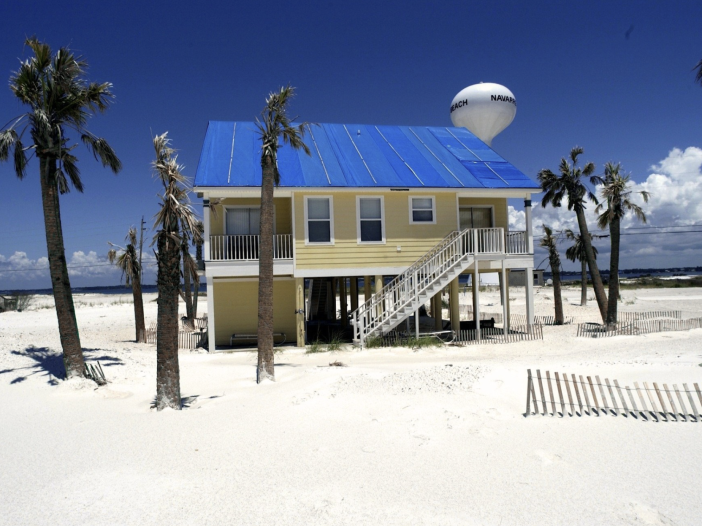
Many Gulf Coast advisors work with clients who own a vacation home. They know the property exists. They may have factored it into the financial plan. What often goes unaddressed is the legal structure around it and what happens when there is none.
This is worth a conversation.
Why the Vacation Home Gets Overlooked
Advisors are thorough about retirement accounts, life insurance, and beneficiary designations. Real estate is different. It does not show up in a brokerage statement. It does not have a beneficiary designation field. It sits in the background of the financial plan, appreciated and unstructured, until someone has to deal with it.
For Gulf Coast clients who own property in both Alabama and Florida, the stakes are higher than most realize.
The Ancillary Probate Problem
When a client dies owning real estate titled solely in their name in another state, their estate faces two separate court proceedings. An Alabama resident who owns a Florida beach house requires ancillary probate in Florida in addition to the primary probate in Alabama. That means two courts, two attorneys, two timelines, and two sets of legal fees, all running simultaneously while the family is grieving.
This is not an edge case. It is a routine situation for Gulf Coast families, and it is almost entirely avoidable with the right structure in place.
What Are the Options for Avoiding Ancillary Probate?
There are two primary approaches worth understanding. Each serves a different type of client situation.
The Easier Path: A Revocable Trust
For most clients, the simpler solution is a revocable living trust. When real estate is titled in the name of the trust rather than the individual, it does not pass through probate at all, in either state. There is no separate Florida proceeding, no second attorney, and no additional court timeline.
A revocable trust also preserves the client’s control during their lifetime. They can amend it, revoke it, or adjust it as circumstances change. At incapacity or death, the successor trustee steps in and manages or distributes the property according to the client’s instructions, and without court involvement.
For clients whose primary concern is simplicity and probate avoidance, titling the vacation home in a revocable trust is often the most straightforward path forward. If the client does not yet have a revocable trust, this conversation is a natural opening to address the broader estate plan at the same time.
When an LLC Makes Sense
A limited liability company is a different tool that serves a different purpose. It also solves the ancillary probate problem, because an LLC converts real estate into a membership interest, which is personal property that passes through the owner’s home state only.
Where an LLC adds value beyond probate avoidance is in the governance structure it creates. An operating agreement addresses who makes decisions about the property, how expenses are shared, how usage is scheduled, and what happens if a family member wants out. For clients with multiple children, a blended family, or property they intend to hold across generations, that framework can prevent the kind of friction that quietly erodes both relationships and property value.
Like a revocable trust, an LLC needs to coordinate with the client’s broader estate plan. An LLC created in isolation — without alignment to the will, trust, and powers of attorney — may not perform as expected. That coordination is where the advisor and the estate planning attorney need to be working together.
A Question Worth Asking
If your client owns a vacation home, ask whether it is titled in their name alone. Ask whether they have a revocable trust and whether the property has been transferred into it. Ask whether they have thought about who is in charge of managing the property and how decisions get made among family members.
In many cases the answer will reveal a gap. The right solution depends on the client’s situation. Closing that gap is straightforward. Leaving it open is not.
A Resource for You and Your Clients
Heircraft Planning works alongside advisors when a client is ready to address the legal side of their planning. We encourage that kind of collaboration. If you would like to share our educational content with a client, you are welcome to do so. Our blog library and free resources are available at heircraftplanning.com.