How to Build Charitable Giving Into Your Estate Plan
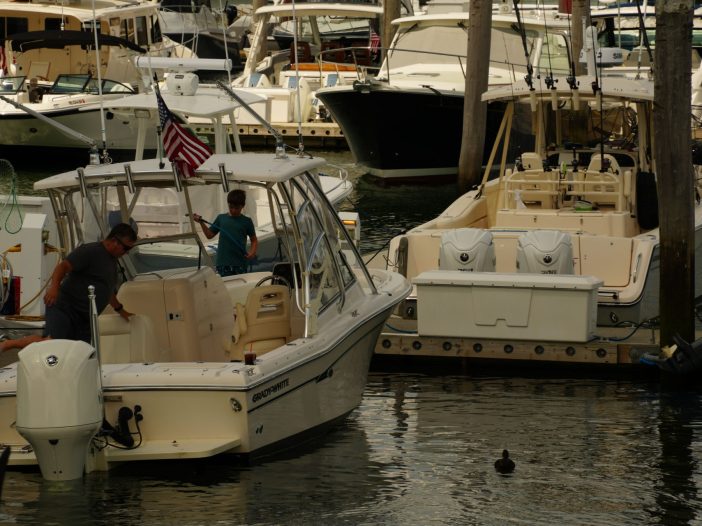
This summer, the owner of a boat manufacturer in North Carolina turned down a $400 million offer for his company and chose something different instead. Most of the families Heircraft Planning works with in Alabama and Florida are not weighing a decision anywhere near that size. They are thinking about a house, a retirement account, or a cause that has mattered to them for years. Still, his decision is a useful example of how charitable giving can become part of an estate plan, regardless of the size of the estate involved.
Eddie Smith bought Grady-White Boats in 1968, when the company was headed toward bankruptcy, and built it into one of the most respected names in offshore fishing boats. When buyers offered more than $400 million for it outright, he said no. Instead, he placed the company into a perpetual purpose trust paired with a new nonprofit that will direct its future profits toward causes like conservation, health care, and education, and gave every one of Grady-White’s 350 employees a bonus tied to their years of service.
It is an extraordinary story, but underneath the size of the numbers, it comes down to an ordinary set of decisions: who has authority over what you built, what happens to it when you are no longer the one making the calls, and who is protected when that happens, from the employees who depend on the business to the people you love and the causes you care about.
Why Did Smith Choose This Path Instead of Selling?
Smith’s original plan was simple. His son, Chris, would eventually take over the company. That plan ended five years ago, when Chris died of ALS. Smith’s wife of 57 years had passed away the year before.
With no one to hand the business to, and no buyer he trusted to preserve what he had built, Smith needed a different answer. He had watched friends in the boating industry sell their companies, and by his account, none of them were happy with what happened afterward. The culture changed. The values that had defined the business did not survive the sale.
So instead of selling, he gave the company a structure designed to outlast him.
What Is a Perpetual Purpose Trust?
A perpetual purpose trust is not something most families will ever need, but understanding the basic idea is useful, because it is really just an estate planning concept applied at a larger scale.
In Grady-White’s case, the company’s voting stock, the shares that control decision-making, now belong to a newly formed trust built specifically to keep the company operating according to Smith’s values. The non-voting stock, which carries the right to profits, went to a new nonprofit organization. Neither the trust nor the nonprofit is run by Smith. Both are overseen by independent boards, which is a requirement of this kind of structure, not an optional detail.
The result is a company that can never be sold, that keeps its existing leadership team in place, and that sends the bulk of its future profits to charitable causes rather than to a single owner or a group of shareholders. Smith gave up any personal claim to the proceeds of a future sale, along with the tax benefit he could have claimed by donating the stock outright.
Smith gave up any personal claim to the proceeds of a future sale, along with the tax benefit he could have claimed by donating the stock outright. It is a rare approach. Only a small number of U.S. companies have used one, and Grady-White is reportedly the first in the marine industry to do so.
How Can Alabama and Florida Families Build Charitable Giving Into Their Estate Plan?
Here is the piece of this story that matters most, even if you will never own a company worth $400 million. Smith’s decision was not really about the size of the gift. It was about deciding, ahead of time and while he still could, what he wanted to happen to something he cared about.
That is the same work every estate plan is trying to do, whether the asset is a boat manufacturer or a house, a retirement account, or a modest inheritance you would like to leave to a cause that matters to you.
You do not need a perpetual purpose trust to build charitable giving into your estate plan. Most families in Alabama and Florida who want to support a cause they care about use much simpler tools, including donor-advised funds, charitable remainder trusts, and beneficiary designations.
Donor-advised funds let you set aside money for charitable giving, receive an immediate tax benefit, and recommend grants to organizations over time. Charitable remainder trusts can provide you with income during your lifetime while directing what remains to a cause you choose. Beneficiary designations let you name a charity directly on a life insurance policy or retirement account. In both Alabama and Florida, assets that pass by beneficiary designation move directly to the organization named, without going through probate.
Why Does Charitable Giving Belong in an Estate Plan?
Most estate planning conversations focus on family: who inherits the house, who raises the children, who has authority if something happens to you. Those questions matter, and they come first for most people.
An estate plan can also reflect the things you have supported throughout your life. A cause, a community, a church, a scholarship fund. Without a plan, none of that happens by default. Under Alabama law and Florida law alike, the organizations or causes you would have wanted to help are not entitled to anything unless you have said so, clearly and legally, in advance.
Eddie Smith had the means to make an extraordinary decision. What made it work was not the size of his company. It was that he took the time, with the right people and the right documents, to make sure his values had a structure to live in after he stepped back. That kind of planning, on whatever scale fits your situation, is available to anyone.
Estate planning is not just about who receives what you leave behind. It is about deciding, in advance, what matters to you and putting a plan in place to carry that out.
If you would like to learn more, Heircraft Planning offers several free resources. You can download our free estate planning guide, watch an on-demand webinar, or browse our full blog library at heircraftplanning.com. Free in-person seminars are held throughout the year in Mobile. View upcoming dates and register at heircraftplanning.com/upcoming-events.
If you are ready to take the next step, you can schedule a consultation with Mark at heircraftplanning.com. We are here to help you understand your options and put a plan in place that reflects what matters most to you.