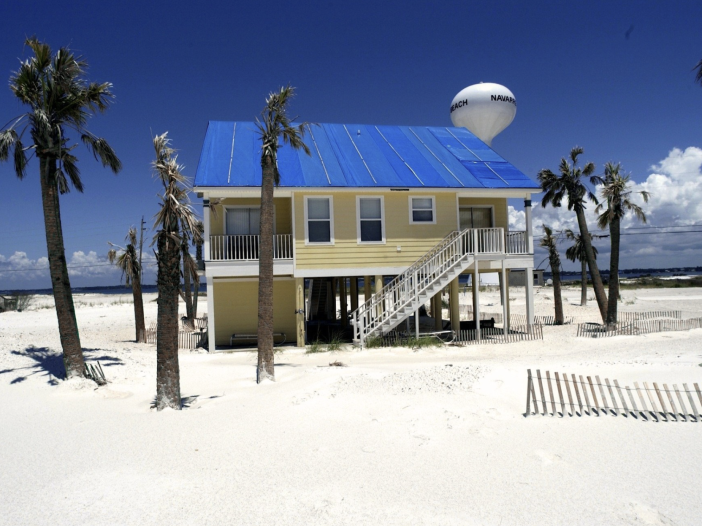
For many Gulf Coast families in Alabama and Florida, deciding between a trust or LLC for a vacation home comes down to one simple question: what does this family actually need? A beach house is not just real estate. It is where summers happen, where the kids learned to fish, and where grandchildren will likely do the same one day.
That weight is exactly what makes passing it down so complicated. When a vacation home goes to multiple heirs without a plan, the property itself does not change, but the relationships around it often do. Decisions about maintenance, scheduling, costs, and eventually whether to sell become shared problems among people who may not agree.
Under Alabama and Florida law, moving that property to the next generation can also involve court proceedings most families never anticipated. A revocable trust and a limited liability company each address that problem, in different ways. Understanding both is a reasonable place to start.
What Happens to a Vacation Home Without a Plan in Alabama or Florida?
When a property owner in Alabama dies owning a vacation home titled solely in their own name, that property goes through probate. The Alabama probate court oversees how the asset transfers to heirs.
If the home sits in Florida but the owner was an Alabama resident, the family faces a second layer: ancillary probate. Ancillary probate is a separate court proceeding, opened in the state where the property is located. An Alabama resident who individually owns a Florida beach house will need ancillary probate in Florida in addition to the primary probate proceeding in Alabama.
That means two courts, two sets of legal fees, two timelines, and two different bodies of law, all while the family is grieving. The same situation runs in reverse. A Florida resident who owns a cottage on the Alabama Gulf Coast faces an ancillary probate proceeding here too.
This is not a rare edge case along the Gulf Coast. It is a common reality for families who spend time on both sides of the state line.
Trust or LLC: What Are the Options for Protecting a Vacation Home?
There are two primary structures worth understanding, and each serves a different kind of family situation. Both can prevent ancillary probate. They do it in different ways, and each offers something different beyond that.
Is a Revocable Trust the Easier Path for a Vacation Home?
For many families, the simpler solution is a revocable living trust. When a vacation home is titled in the name of the trust rather than the individual owner, it does not pass through probate at all, in either state.
There is no separate Florida proceeding for an Alabama resident, and no separate Alabama proceeding for a Florida resident. The trust also preserves the owner’s control during their lifetime. They can amend it, revoke it, or adjust it as circumstances change.
At incapacity or death, a successor trustee steps in and manages or distributes the property according to the trust’s instructions, without court involvement. For families whose main concern is simplicity and avoiding probate, titling the vacation home in a revocable trust is often the most direct path forward.
If a family does not yet have a revocable trust, the vacation home is often the reason to build one. It becomes a natural opening to address the broader estate plan at the same time.
When Does an LLC Make More Sense for a Vacation Home?
An LLC solves the same ancillary probate problem, but through a different mechanism. It converts real estate into a membership interest, which is personal property. Personal property passes through the owner’s home state only, not the state where the property is located.
Where an LLC adds something a trust does not is governance. An operating agreement functions like a rulebook for the property. It can address who is responsible for maintenance decisions, how expenses are divided among family members, how the home is scheduled during peak season, and what happens if a family member wants out.
For families with multiple children, a blended family, or a home they intend to hold across generations, that structure can prevent the kind of friction that quietly wears down both relationships and property value over time.
What Does an LLC Actually Do for a Vacation Home?
Once a vacation home moves into an LLC, the family no longer owns real estate directly. They own membership interests in the LLC, and the LLC owns the property. That distinction matters in several practical ways.
It converts real property to personal property for probate purposes. A membership interest in an LLC is personal property, not real estate. When an LLC member dies, those interests pass through probate in their home state only. For Alabama and Florida families who own property across state lines, this alone can justify the structure.
It creates a framework for management. The operating agreement can address who is responsible for maintenance decisions, how expenses are divided among family members, how the home is scheduled for use during peak seasons, and what happens if a member wants to exit. Without that document, those conversations happen during moments of stress instead of being decided in advance.
It addresses the question of who is in charge. This connects directly to something every estate plan has to answer: who has authority, and when. A well-structured LLC designates a manager who can make day-to-day decisions without requiring unanimous agreement from every family member. In a large or geographically dispersed family, that clarity prevents gridlock.
It can restrict ownership transfers. The operating agreement can prohibit a member from transferring their interest to anyone outside the family. It can also protect the property if a family member goes through a divorce or faces creditor claims. An ex-spouse may have no legal claim to a membership interest if the agreement is properly drafted.
Where Does an LLC Fall Short for a Family Vacation Home?
An LLC is a useful structure, but it does not resolve every issue a vacation home presents.
It does not replace the conversation about whether keeping the property makes sense. Not every family is positioned to share a vacation home across generations. Costs, distance, and honest differences in interest can make shared ownership more burden than blessing. An LLC provides structure for ownership. It does not manufacture the will to share it.
It also does not run itself. The LLC needs to be properly funded, meaning the deed must actually be transferred into the entity’s name. The operating agreement must be carefully drafted, and depending on the situation, there may be ongoing tax filings and administrative obligations.
Like a revocable trust, an LLC needs to be coordinated with the rest of the estate plan. An LLC created in isolation, without alignment to the will, trust, and powers of attorney, may not perform as expected. In some situations, combining an LLC with a trust offers the most complete solution: the property is owned by the LLC, while the family’s membership interests are held in individual trusts.
Who Has Authority Over a Vacation Home When It Matters Most?
One question every estate plan has to answer is who steps in when a decision needs to be made. With a vacation home, that question becomes concrete quickly.
If an owner becomes incapacitated, who can authorize repairs? Who makes decisions about renting the property? Who signs documents on behalf of the family? Without a manager designated in the operating agreement or the trust, and without a durable power of attorney and an advance directive, the family may find that no one has clear authority to act.
The structure only works if the right people have the right authority at the right time. That is true for any estate plan, and it is especially true for shared property.
Keeping the Decision in the Family’s Hands
A vacation home often represents something much larger than its assessed value. It is a decision about what stays in the family, how the next generation experiences the place, and what kind of transition the owner wants to create.
Without planning, those decisions move to the legal system by default. Alabama courts and Florida courts will determine how the property transfers, on a timeline the family does not control, through a process that costs both money and time.
Whether the right fit is a trust or LLC for a vacation home depends on the family. Either one keeps that decision where it belongs, in the hands of the people who know the property and care what happens to it.
If you would like to learn more, Heircraft Planning offers several free resources. You can download our free estate planning guide, watch an on-demand webinar, or browse our full blog library at heircraftplanning.com. Free in-person seminars are held throughout the year in Mobile. View upcoming dates and register at heircraftplanning.com/upcoming-events.
If you are ready to take the next step, you can schedule a consultation with our team at heircraftplanning.com. We are here to help you understand your options and put a plan in place that reflects what matters most to you.